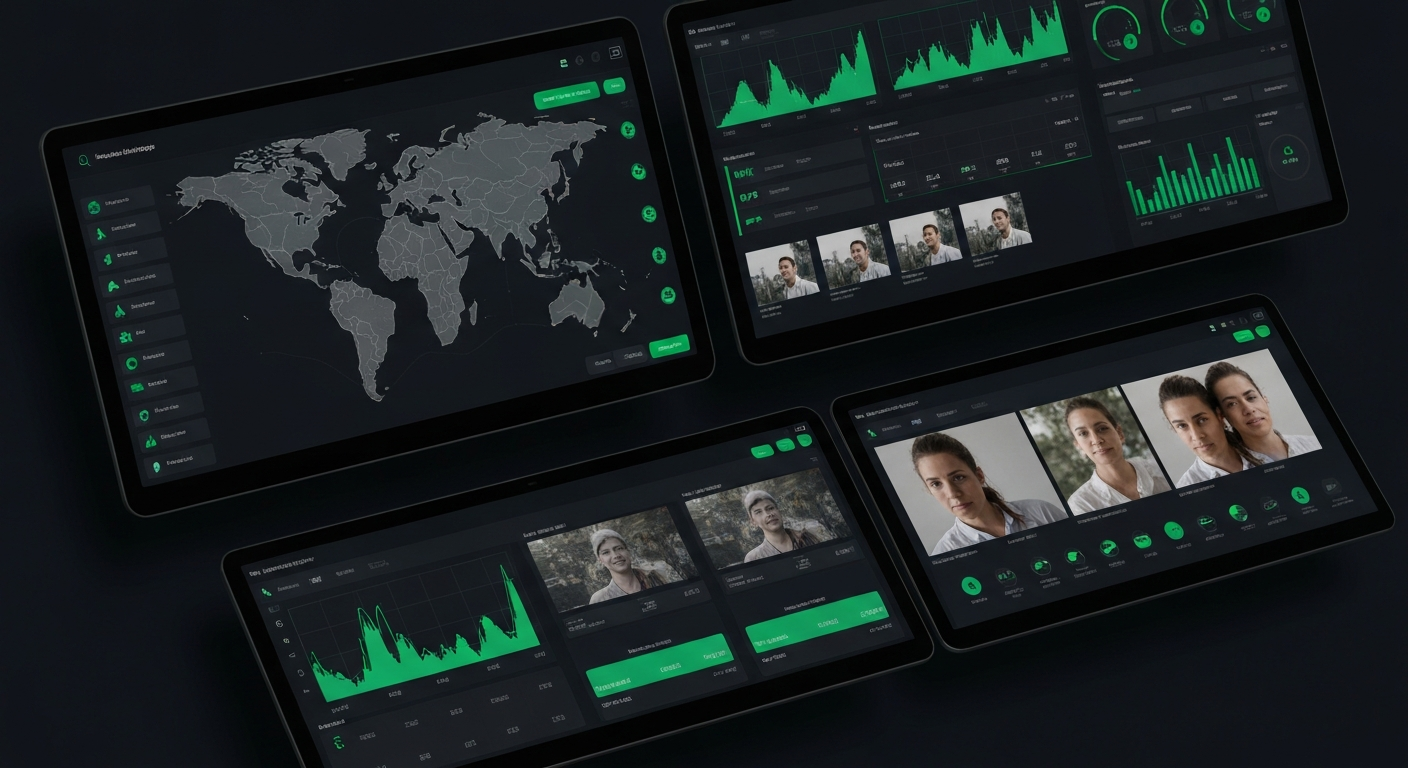
What is OSINT?
Open-source intelligence (OSINT) is the collection and analysis of information from publicly available sources. This includes social media posts, satellite imagery, news reports, public records and — crucially for our purposes — photos and videos shared online.
OSINT has grown from a niche discipline practised mainly by intelligence agencies into a global community of journalists, researchers, activists and hobbyists. Organisations like Bellingcat, the Centre for Information Resilience and countless independent investigators have demonstrated that publicly available information, rigorously analysed, can reveal truths that powerful actors would prefer to keep hidden.
Geolocation lies at the heart of modern OSINT practice. Determining where a photo or video was taken is often the first step in verifying a claim, documenting an event or building an investigation.
The manual geolocation toolkit
Before discussing AI-assisted approaches, it is worth understanding the traditional techniques that OSINT practitioners have refined over the past decade. These manual methods remain valuable and often complement automated tools.
Environmental clues
Signs and text. Street signs, shop names and advertising boards are the most direct indicators of a location. Even partially visible text can dramatically narrow the search area. The language, script and style of signage all carry information — Dutch street signs look different from German ones, even without reading the text.
Architecture. Building styles vary by region, era and function. Dutch canal houses are distinctive. The style of social housing, roofing materials and facade patterns can indicate not just a country but often a specific city or neighbourhood.
Vegetation. Plant species, tree types and the general character of greenery vary with climate and geography. Palm trees point to a different location than birch forests. The season visible in the vegetation can also help establish timing.
Infrastructure details. Utility poles, traffic lights, road markings, fire hydrants and bollards all follow regional standards. The Netherlands has distinctive road infrastructure — from the style of cycle path markings to the design of traffic lights — that a trained analyst can recognise.
Shadow analysis and Street View
The direction and length of shadows, combined with knowledge of the date and estimated latitude, can help narrow down a location. Tools like SunCalc model the sun’s position for any location and time. Once an analyst has a hypothesis, platforms such as Google Street View and Mapillary can be used to virtually visit the spot and compare it to the image under investigation.
Where manual methods reach their limits
Manual geolocation is powerful but has significant limitations:
Time. A skilled analyst might spend hours or even days geolocating a single challenging image. When investigating events involving dozens or hundreds of images, manual analysis simply does not scale.
Expertise. Effective manual geolocation requires deep familiarity with regional visual features. An analyst who can instantly recognise Dutch infrastructure may struggle with images from Southeast Asia. Nobody can be an expert on every region.
Generic scenes. Some images lack the distinctive features that manual analysis relies on. A residential street without visible signage, with standard buildings and common vegetation can be nearly impossible to geolocate manually, even for an expert.
Bias. Human analysts are susceptible to confirmation bias. Once they form a hypothesis about a location, they unconsciously favour evidence that supports it.
How AI-driven geolocation fits in
AI-driven tools like GeoPin address these limitations by approaching geolocation from a fundamentally different angle. Instead of searching for individual recognisable clues, the model analyses the entire visual scene holistically.
The AI is trained on millions of geotagged images and has learned to associate visual patterns with locations. This means it can work with images that have no single identifiable feature — the overall combination of road surface, building style, vegetation, sky and spatial layout is often enough to generate a match.
A practical OSINT workflow with GeoPin
Here is how AI geolocation integrates into a typical OSINT investigation:
1. Initial triage. When processing a large set of images (for example from a social media scrape), run them through GeoPin first. High-confidence matches can be quickly confirmed and set aside. Low-confidence results flag images that need manual attention.
2. Hypothesis formation. For images where GeoPin returns a moderate-confidence result, use the suggested location as a starting point for manual verification. Open Street View at those coordinates. Check whether the surroundings match.
3. Verification. Even for high-confidence automated results, manual verification is good practice in critical investigations. GeoPin provides reference image matches — compare the matched reference images directly with your search image to confirm that the geometric correspondence holds.
4. Negative confirmation. If a source claims a photo was taken at location X, but GeoPin matches it with high confidence to location Y, that discrepancy is itself valuable evidence.
5. Batch processing. For large-scale investigations involving hundreds of images, the API enables automated processing that would take a team of analysts weeks to perform manually.
Responsible use
OSINT geolocation is a powerful capability that carries ethical responsibilities. The ability to determine where a photo was taken can be used to hold the powerful to account, but it can also be misused to track individuals or violate privacy.
Best practices include: exercising caution when geolocating images that could reveal the location of vulnerable individuals; verifying results before publishing them as fact; documenting your methodology for credibility and reproducibility; and respecting the legal frameworks of the jurisdictions in which you operate.
Geolocation is a tool. Like any tool, its value depends on the skill, judgement and ethics of the person using it. Combined with careful analysis and responsible practices, AI-driven geolocation makes OSINT investigations faster and more thorough than ever before.